
Home › Free Tests › Brain Dominance Scale
Thinking style assessment
Free Left Brain vs. Right Brain Test: How Do You Think?
Analytical or intuitive? Step by step or big picture? In 20 questions, the Brain Dominance Scale shows which thinking style you lean toward, with an instant, personalized interpretation and an honest look at what “left-brained” and “right-brained” really mean.
Free · 20 questions · Under 10 minutes · Instant interpretation
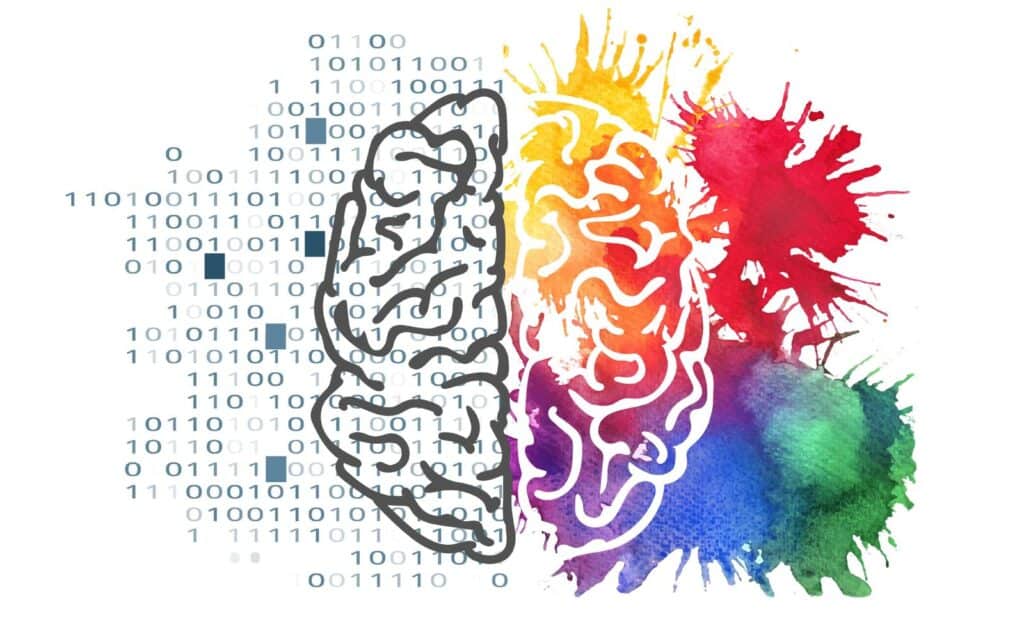
What you’ll discover
Logic and detail, or intuition and the big picture?
Everyone uses both styles of thinking, but most of us have a favorite. Knowing yours helps you learn more easily, work better with people who think differently, and stretch into the style that doesn’t come naturally.
Your thinking style
Whether you lean analytical, holistic or balanced, and how strongly.
How you learn and solve problems
Whether you prefer step-by-step reasoning or seeing the whole pattern first.
The real science
What brain research actually says about the left and right hemispheres, myths included.
Personalized results, not a form letter
Most left brain/right brain quizzes stamp you with one side and a stock paragraph. Your interpretation is written for your exact score, including how you tend to learn, decide and communicate, and practical ways to use the style that comes less naturally.
The test
Take the Brain Dominance Scale
20 questions, under 10 minutes. Answer based on how you naturally think and work, not how you think you should. There are no right or wrong answers, and your personalized interpretation appears as soon as you finish.
The two styles
Left-brain and right-brain thinking styles
Your result falls somewhere on a spectrum between two familiar thinking styles. Most people land closer to the middle than they expect.
Analytical
- Logic, reasoning and evidence
- Step-by-step, sequential thinking
- Language, facts and detail
- Planning, structure and clear rules
- Breaking problems into parts
Holistic
- Intuition and gut feeling
- Big picture and patterns
- Imagery, emotion and metaphor
- Spontaneity and flexibility
- Creative leaps and new connections
Myth or science?
What brain research really says
The left-brain/right-brain idea grew out of real, Nobel Prize-winning science, then took on a life of its own in pop culture.
It started with split-brain research
In the 1960s, Roger Sperry studied patients whose brain hemispheres had been surgically separated and found that each side specializes in certain tasks. He shared the 1981 Nobel Prize in Physiology or Medicine for this work.
Some functions do lean to one side
In most people, language relies more on the left hemisphere, while things like face recognition and spatial attention lean more on the right. Scientists call this lateralization.
People are left-brained or right-brained
A 2013 University of Utah study of more than 1,000 brain scans found no evidence that people use one hemisphere more than the other overall. Personality isn’t written in one side of the brain.
Logic lives on the left, creativity on the right
Both creative and logical thinking draw on networks spread across both hemispheres, connected by the corpus callosum and working together constantly.
So what does it measure?
Your thinking preferences, and how to use them
The scale doesn’t measure your brain. It measures real, meaningful differences in how people prefer to think: analytical and step-by-step, or intuitive and big-picture. That’s useful to know.
Learning
Start with what feels natural, whether that’s outlines and details or diagrams and the big picture, then deliberately mix in the other approach. Variety beats a single “learning style.”
Work and teams
Analytical thinkers catch problems; holistic thinkers spot possibilities. Teams do best with both, and with people who understand how the other side thinks.
Stretching yourself
Thinking styles are preferences, not limits. Practicing the style that comes less naturally builds flexibility, which is one of the most valuable thinking skills of all.
About the scale
An honest thinking-style test
What your results can’t tell you
About the Brain Dominance Scale
The Brain Dominance Scale is a Hypnotechs assessment of 20 questions that takes under 10 minutes. It’s inspired by the original Open Hemispheric Brain Dominance Scale, published in 2015 by Eric Jorgenson of the Open-Source Psychometrics Project. It measures thinking-style preferences, not brain structure or activity, and every result includes an immediate, personalized interpretation.
FAQ
Left brain vs. right brain test: common questions
What is the Brain Dominance Scale?
It’s a free thinking-style assessment that shows whether you lean toward an analytical (“left-brain”) style, a holistic (“right-brain”) style, or a balance of both.
Am I really left-brained or right-brained?
Not literally. Brain-imaging research shows people don’t favor one whole hemisphere over the other. The labels are shorthand for real differences in thinking style.
How many questions are there, and how long does it take?
The scale has 20 questions and takes less than 10 minutes.
What do I get at the end of the test?
Not a form letter. As soon as you finish, you get an instant interpretation written for your exact score, including how you tend to learn, decide and communicate.
What does “left-brain” thinking mean?
It’s a nickname for an analytical style: logical, sequential, detail-focused and comfortable with structure and rules.
What does “right-brain” thinking mean?
It’s a nickname for a holistic style: intuitive, big-picture, imaginative and comfortable with ambiguity.
Where did the left-brain/right-brain idea come from?
From Roger Sperry’s split-brain research in the 1960s, which earned a Nobel Prize in 1981. Popular culture later stretched his findings into personality types.
Can my thinking style change?
Yes. Styles are preferences, and practice, training and experience can make you more flexible in both directions.
What was the original Open Hemispheric Brain Dominance Scale?
A 20-question scale published in 2015 by Eric Jorgenson of the Open-Source Psychometrics Project. The Hypnotechs version is inspired by that original work.
Is this test free?
Yes. The Brain Dominance Scale is completely free, including your personalized interpretation, and you do not need an account to take it.
How does your mind slip into focus?
Explore how you concentrate, absorb and filter the world with the free Focus & Trance State Profile, including an instant, personalized interpretation.
The Brain Dominance Scale is an educational thinking-style assessment by Hypnotechs, inspired by the Open Hemispheric Brain Dominance Scale by Eric Jorgenson. Hypnotechs is not affiliated with the Open-Source Psychometrics Project. The scale does not measure brain structure or function and is not a clinical assessment.